Pulmonary Tuberculosis
Understanding Tuberculosis (TB)
Hello! As a Pulmonologist—a doctor specializing in lung diseases here in the Philippines—one of the most common conditions I treat is Tuberculosis, or TB. I know that hearing a diagnosis of TB can be worrying, and there is a lot of confusing information out there.
My goal today is to give you clear, simple, and reliable information. Please remember, TB is a treatable and curable disease. Knowledge is the first and most powerful step towards recovery.
What Exactly is Tuberculosis (TB)?
Tuberculosis is an infectious disease caused by a specific type of bacteria called Mycobacterium tuberculosis. It commonly affects our lungs hence the disease called Pulmonary Tuberculosis. Other sites of our body can also be infected with TB such as the lymph nodes, gastrointestinal tract, bones and even our brain, this is also known as the Extra-pulmonary Tuberculosis.

The most important thing to know is this: TB is curable. With the right medication and commitment to treatment, you can make a full recovery.
How Does TB Spread?
TB is an airborne disease. This means the bacteria travel through the air. When a person with active Pulmonary TB coughs, sneezes, talks, or sings, they release tiny droplets containing the bacteria. If another person inhales these droplets, they can become infected.
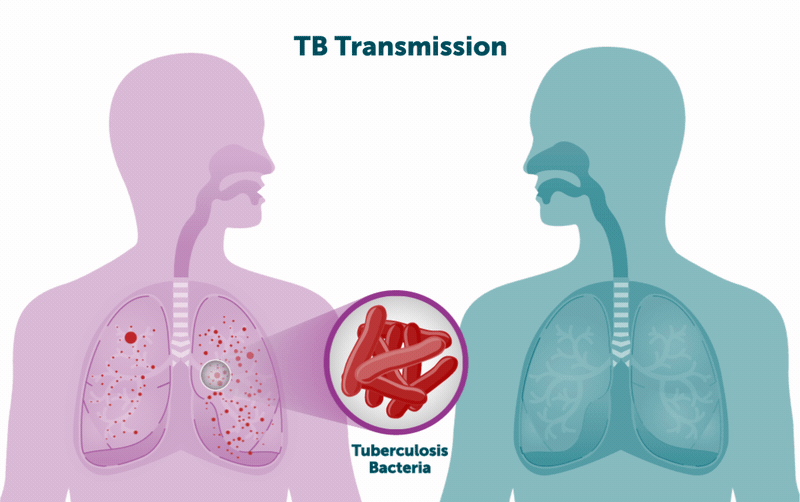
Image copied from Centers for Disease Control
You DO NOT get TB from:
Shaking someone's hand
Sharing food, utensils, or dishes
Touching bed linens or toilet seats
Sharing clothes
Transmission usually requires spending a significant amount of time in close contact with someone who is sick, which is why household members are at the highest risk. The workplace can also be a source of the infection, especially if there is someone who is diagnosed to have a Pulmonary TB disease and is symptomatic.
Active PTB disease versus Latent TB infection
Having a Latent TB Infection means the TB bacteria are in your body, but they are inactive or 'sleeping.' They are not making you sick, and you cannot spread them to anyone. We discover this through a skin or blood test.
On the other hand, if those bacteria 'wake up,' they cause Active TB Disease. This is when you feel sick with symptoms like a cough and fever, and you can now spread the illness to others. Active TB disease also presents with a positive sputum exam, radiologic findings such as via Chest X-ray or CT scans.
What are the Common Signs and Symptoms of TB?
If you are experiencing the following, especially a persistent cough, it is very important to make an appointment for a check-up.
A cough that lasts for two weeks or longer **This is the hallmark symptom of TB
Fever, especially in the afternoon or evening.
Night sweats (waking up with damp clothes and sheets).
Unexplained and significant weight loss.
Constant fatigue and a general feeling of weakness.
Loss of appetite.
Chest pain.
In some cases, coughing up phlegm with streaks of blood (hemoptysis).
I've Been Diagnosed with TB. What Should I Expect from Treatment?
TB is treated with a combination of special antibiotics. There are four different TB medicines that are currently available in the Philippines. These medicines are combined into a single formulation tablet and is taken daily. Depending on your weight, we will adjust the number of tablets to be taken per day.

The standard treatment course usually lasts for six (6) months, though some cases may require longer treatment. It is divided into 2 phases, these are the intensive phase followed by the continuation phase.
It is absolutely critical that you take your medicines every single day, exactly as prescribed.
Common Side Effects of the Medication:
It's normal for your body to adjust to the new medicines. Some common, manageable side effects include:
Minimal or localized skin reaction or rashes -- you may take an anti-histamine to relieve this symptom but no need to stop the treatment except if it becomes severe
Mild nausea or stomach upset -- most are self-limiting and tolerated after a few days of TB treatment.
Orange or reddish-colored urine, sweat, or tears -- This is caused by a medicine called Rifampicin. It is completely normal, harmless, and will go away after you finish your treatment.
Mild joint pains -- This can occur due to a slight elevation of the uric acid caused by one of the TB medicine Pyrazinamide. No need to stop the treatment.
Numbness of the extremities -- this can be due to Vitamin B6 deficiency caused by the TB medicine, intake of Vitamin B can usually resolve this.
When to Worry and Call Your Doctor Immediately:
While most side effects are mild, some can be serious. Contact us right away if you experience:
Yellowing of your skin or eyes (jaundice).
Severe nausea and vomiting that prevents you from keeping anything down.
Blurred vision or changes in your eyesight.
A severe skin rash or itching, swelling of eyes and mouth and difficulty in breathing.
Important: If you experience these serious side effects, do not stop taking the medication on your own. Call us first or schedule your next visit in our clinic for proper guidance.
When Do I Stop Taking My Medication?
This is one of the most critical parts of your treatment. You should stop taking your medication only when your doctor tells you that your treatment is complete.
Even if you start feeling better after a few weeks or months, the bacteria are still in your body. If you stop treatment early, the remaining bacteria can become stronger and resistant to the drugs. This leads to Drug-Resistant TB (DR-TB), which is much more difficult, longer, and more expensive to treat. Please, complete your entire course of medication.
How Long Am I Contagious and How Can I Protect My Family?
You are most contagious before you start treatment and during the first few weeks of taking your medication.
The good news is that after about two weeks of consistent daily treatment, the vast majority of patients are no longer contagious.
In the meantime, you can do several things to protect your loved ones:
Take your medicine regularly
This is the fastest way to become non-infectious.
Practice good cough etiquette
Always cover your mouth and nose with a tissue (and dispose of it properly) or with your elbow when you cough or sneeze.
Wear a mask
Especially during the first few weeks of treatment, wear a surgical mask when you are around other people.
Ensure good ventilation
Open the windows and doors in your home to allow fresh air to circulate and disperse any germs. If you don't have a good ventilation in your room, an adequate sized air purifier can help improve the air circulation in the room.
Have your close contacts screened
Your family members and others living in your household should visit a doctor or health center to be checked for TB. You may get better only to get reinfected by your close contacts if not detected.
Foods to Limit or Avoid During TB Treatment
While taking your TB medications, your body is working hard to fight the infection. Eating a balanced diet is crucial, but there are a few specific items you should limit or avoid to prevent side effects and help your liver.
1. Alcohol (Alak)
This is the most important one to avoid completely. Your TB medications are processed by your liver, just like alcohol. Drinking alcohol puts extra, dangerous strain on your liver, increasing the risk of serious liver damage (drug-induced hepatitis).
2. Foods That Can Interact with Isoniazid
Some aged, fermented, or cured foods are high in tyramine or histamine, which can react with your medication (Isoniazid) and cause symptoms like facial flushing, headaches, rapid heartbeat, or skin redness.
Limit your intake of the following:
Aged cheeses (like blue cheese, cheddar)
Cured meats (like salami, pepperoni, some sausages or longganisa)
Fermented products like bagoong (fermented fish/shrimp paste) and buro (fermented rice)
Certain fish like tuna and sardines, especially if not fresh.
3. Foods High in Uric Acid (because of Pyrazinamide)
One of your medicines, Pyrazinamide, can increase uric acid levels, which may cause joint pain (gout).
Limit your intake of foods high in purines, which produce uric acid:
Internal organs (laman-loob) like liver, kidney (bato), and intestines (isaw)
Red meat, especially beef and goat
Seafood, particularly shellfish like shrimp and mussels, and small fish like anchovies (dilis) and sardines
Processed meat extracts and gravy
Beans and lentils, like monggo beans (in moderation)
Your main focus should be a healthy, balanced diet rich in vegetables, fruits, and protein to help your body recover. Always drink plenty of water. If you experience any severe discomfort, especially joint pain, inform your doctor.
Recovering from Tuberculosis is a partnership between you and your healthcare team. By taking your medication faithfully and following medical advice, you are taking control of your health. Remember, TB is curable, and you can and will get better.
Together, we can fight TB and win!
Dr. Marvin Hilario
Disclaimer: This blog post is for informational purposes only and does not constitute medical advice. Please consult a qualified healthcare professional for any health concerns or before making any decisions related to your health or treatment.
References:
Tuberculosis: Causes and How It Spreads. Retrieved July 22, 2025 from https://www.cdc.gov/tb/causes/index.html
Centers for Disease Control and Prevention. (2016, March 18). Latent TB infection and TB disease. U.S. Department of Health & Human Services. Retrieved July 23, 2025, from https://www.cdc.gov/tb/topic/basics/tbinfectiondisease.htm
Centers for Disease Control and Prevention. (2023, November 28). Treatment for TB disease. U.S. Department of Health & Human Services. Retrieved July 23, 2025, from https://www.cdc.gov/tb/topic/treatment/tbdisease.htm
Department of Health, Republic of the Philippines. (2020). Manual of procedures for the National Tuberculosis Control Program (7th ed.). https://doh.gov.ph/sites/default/files/publications/NTP-MOP-7th-Edition.pdf
Longo, D. L., & Nahid, P. (2022). Tuberculosis. In D. L. Kasper, S. L. Hauser, J. L. Jameson, A. S. Fauci, D. L. Longo, & J. Loscalzo (Eds.), Harrison’s principles of internal medicine (21st ed.). McGraw-Hill Education.
World Health Organization. (2022). WHO consolidated guidelines on tuberculosis. Module 4: Treatment - drug-susceptible tuberculosis treatment. https://www.who.int/publications/i/item/9789240048126
World Health Organization. (2024). Global tuberculosis report 2024. https://www.who.int/teams/global-tuberculosis-programme/tb-reports/global-tuberculosis-report-2024


The doctor’s explanation of the importance of proper ventilation and mask wearing during treatment is particularly relevant, especially in crowded household settings. This article provides a clear understanding of practical, easy-to-implement measures for preventing the spread of TB in daily life. Read other articles about interesting facts regarding tuberculosis